How to Decide What to Do After Hail
After a hailstorm, a Center Grove homeowner faces three possible paths: replace the roof, repair it, or leave it alone. Picking the right one saves real money, because replacing a roof that only needed a repair wastes thousands, and patching a roof full of hidden damage buys future leaks and the interior repairs that come with them. The good news is that the decision is not a guess if you take it in order rather than reacting to the worry the storm caused. Here is how to work through it step by step, so the outcome matches the actual condition of the roof. Each step narrows the question, and by the end the repair or replace answer is usually clear and well supported, which also makes the insurance conversation go more smoothly.
Start With a Professional Inspection
Everything begins with a close inspection, because the damage that decides the outcome is so often hidden inside the shingle. A roofer checks the shingles for granule loss and mat bruising, not just the obvious dents on the metal, and maps where the functional damage sits across each slope. This is also the step that tells you whether the moisture risk is real or whether the marks are purely cosmetic and can be left alone. Do not substitute a ground level look or your own climb for this, since both miss the very damage that matters and the roof may be unsafe to walk. The inspection turns a vague worry into a documented picture of the roof's actual condition, and every later decision, from filing a claim to choosing repair or replacement, depends on having that picture in hand.
Be Wary of Storm-Chasing Pressure
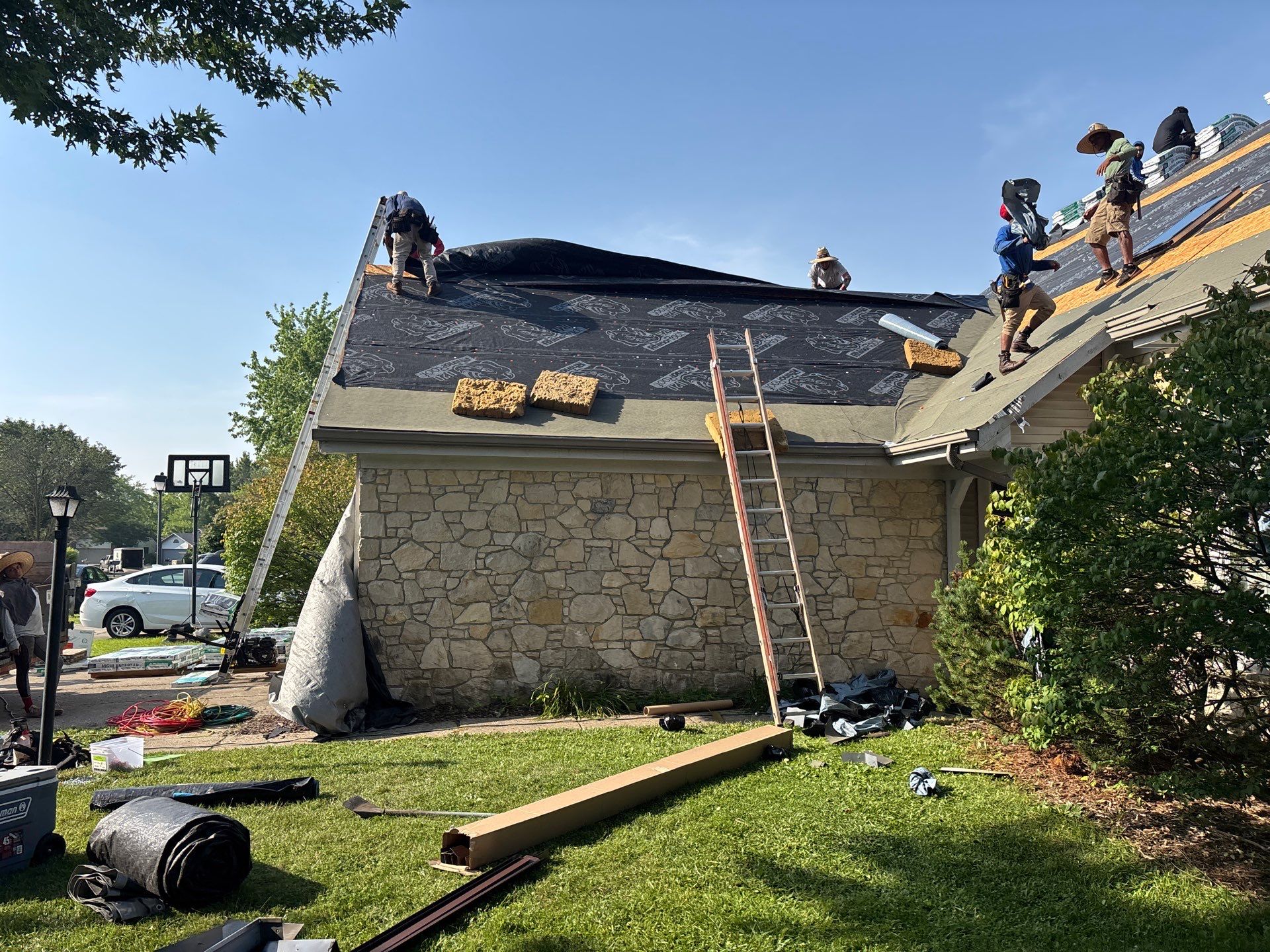
One last factor in the decision is who you let onto the roof. After a big storm, crews from out of the area canvass neighborhoods promising free roofs and pushing homeowners to sign quickly. That pressure works against a sound decision, because the whole point is to base the repair or replace call on a real inspection rather than a sales pitch. A reputable roofer looks closely before promising anything, documents the functional damage, and walks you through the reasoning. Be cautious with anyone who wants a signature before inspecting, offers to absorb your deductible, or has no local track record to point to. The roofer you pick shapes both the quality of the work and how well your insurance claim is supported, so taking time to choose an established Center Grove company is part of making the right decision rather than a separate concern. For a clear answer on whether your roof needs repair or replacement after hail, a professional assessment is the reliable guide. Because the extent of hail damage varies, a professional assessment is the dependable way to determine whether repair or replacement makes sense. Rather than assuming the outcome, having a professional evaluate the damage clarifies what your roof actually needs. Whether a roof needs repair or replacement after hail depends on the damage, which a professional can assess for your situation. A professional who has inspected the roof can explain the extent of any hail damage and the appropriate response. Because an insurance claim may be involved with significant hail damage, a professional assessment can help you understand the situation. For a clear answer on whether your roof needs repair or replacement after hail, a professional assessment is the reliable guide. Because the extent of hail damage varies, a professional assessment is the dependable way to determine whether repair or replacement makes sense. Rather than assuming the outcome, having a professional evaluate the damage clarifies what your roof actually needs. Whether a roof needs repair or replacement after hail depends on the damage, which a professional can assess for your situation. A professional who has inspected the roof can explain the extent of any hail damage and the appropriate response. Because an insurance claim may be involved with significant hail damage, a professional assessment can help you understand the situation.
Act Within the Claim Window
Whatever the inspection shows, timing protects you, so this step matters even when nothing seems urgent. Many policies require a claim within a set window from the date of the storm, and waiting can complicate or bar a claim as it becomes harder to tie the damage to that specific hail event rather than to ordinary wear. So once you have an inspection and know there is functional damage, document the date of the storm with photos and file promptly rather than watching to see whether a leak develops. Acting in time keeps every option open, whether that turns out to be a repair, a full replacement, or simply a documented record that the roof was checked, found sound, and is ready for whenever you eventually sell the Center Grove home.
Sort Functional Damage From Cosmetic
With the inspection done, separate the damage that affects how the roof works from the damage that only affects how it looks. Granule loss that exposes the mat, fractured mats, and punctures are functional and drive a repair or a replacement. Shallow dents on a metal vent that still functions are cosmetic and often need no action, and several policies exclude them from coverage outright. This sorting is what determines both whether you should do anything at all and whether insurance is likely to help with it. If the inspection found only cosmetic damage, you may be looking at no action rather than a new roof, which is a genuinely good outcome and one worth confirming with documentation in case the question comes up again when you sell the home.
Weigh Severity, Spread, and Roof Age
Now combine the three factors that carry the most weight: how severe the functional damage is, how widely it is spread across the roof, and how old the roof already is. Light, isolated functional damage on a roof with years of life left leans clearly toward a repair. Heavy, widespread mat fracturing leans toward replacement, since patching would leave many compromised shingles behind to fail in the next year or two. An older roof shifts the balance further toward replacement, because it was already near the end and took the hail harder than a newer roof would have. These three factors together, drawn directly from the inspection and the impact counts, usually make the repair or replace answer clear without much ambiguity, which is exactly why the inspection comes first.
Factor In Insurance and Deductible
The money side shapes the decision as much as the damage does. Hail is usually covered, so a claim may fund a repair or a replacement, but check your wind and hail deductible carefully, since it is often separate from the standard one and sometimes a percentage of the home's insured value. Compare that deductible to the likely repair cost before you decide what to do. For small, isolated damage, the repair can cost less than the deductible, in which case filing a claim may not be worth it and you simply handle the repair directly. For widespread damage that points to a replacement, the claim is often what makes the work affordable in the first place, so the deductible becomes a smaller piece of a much larger number. Reading these terms keeps the financial picture realistic.